Jean for Robotics
Physical intelligence.
No training required.
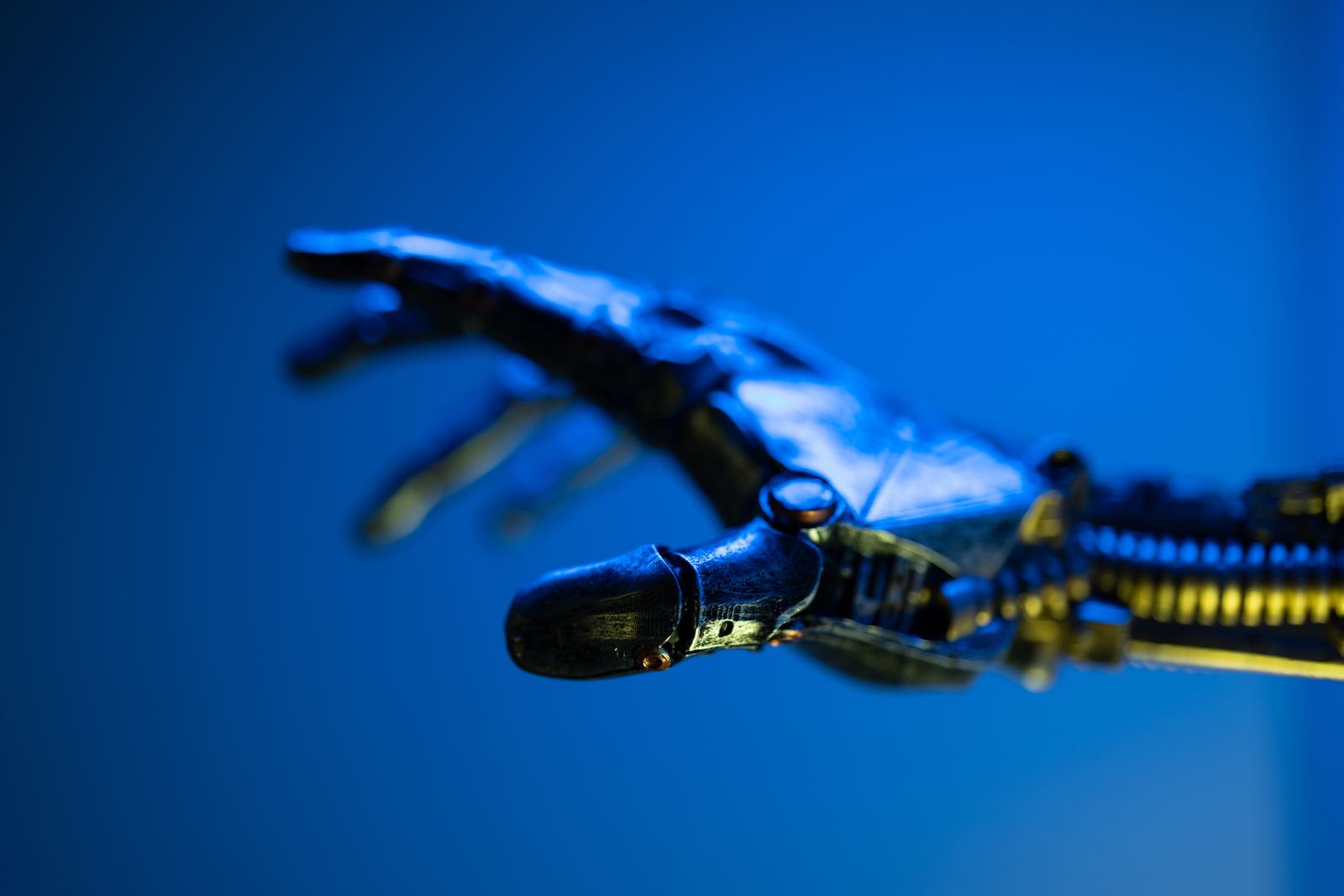
Jean controls a 7-DOF robotic arm using deterministic reasoning — not a learned policy, not a neural network trained on millions of examples. The same engine that handles education and cybersecurity handles a physical arm in the real world.
The claim
Jean's architecture is substrate-invariant.
One deterministic reasoning engine generalizes across domains without being rebuilt for each. This SIL tests that claim in the substrate where Jean has the least prior advantage — physical manipulation.
"The result that survives a hostile reader is the only result worth showing. Jean's reasoning ran inside the loop — placement, perception, kinematics, and physics were provided by the simulation environment. None of it was authored by Jean."
Why this matters
Two results that tell the whole story.
Refusing impossible tasks is as important as completing possible ones
Four tasks were designed to be physically impossible — targets out of reach, eyes too small for the gripper. Jean refused all four, with specific reasons each time.
A system that claims success on impossible tasks is dangerous. The integrity of any physical AI system depends on its ability to recognize and name its own limits. Jean does this — and it does it without being told in advance which tasks are impossible.
Zero false successes is the integrity guarantee
Across all runs, Jean never reported a success it did not physically earn. No optimistic reporting, no partial completion counted as full success, no ambiguous result called a win.
In physical systems — industrial automation, surgical assistance, defense applications — a false success can cause real harm. The zero false success record is not a nice-to-have. It is the precondition for deployment in any high-stakes environment.
How Jean reasons about physical space
Jean's reasoning ran inside the control loop. Placement decisions, perception of the workspace, inverse kinematics selection, and rigid-body physics were provided by the simulation stack (ROS 2, MoveIt 2, Gazebo). Jean supplied the reasoning layer — deciding which grasp to attempt, how to adjust for precision, and when to refuse.
This is not a robotic arm trained on robot demonstrations. There is no training data. No learned policy. No neural network. The same deterministic reasoning engine that decides whether a student's lesson plan is complete decides whether a gripper approach is viable. Substrate changes. Engine doesn't.
How Jean controls the arm
Three decisions. All deterministic.
Grasp selection
Jean evaluates the target — geometry, accessibility, tolerance — and selects a grasp approach. Deterministic scoring, not probability sampling. Jean can explain why it chose the approach it did.
Precision adjustment
Jean adjusts for the gap between the planned approach and the physical constraints of the target. On standard tolerance, this runs at sub-1mm accuracy. On fine tolerance, the current boundary is named below.
Refusal with reason
When a task is physically impossible, Jean refuses — and names the reason. Out of reach. Eye too small. Gripper clearance insufficient. The system knows what it doesn't know.
The honest boundary — named, diagnosed, fix specified
Fine-precision threading (0.4mm eye) is not yet achieved.
On fine-tolerance trials, Jean's reasoning was correct every time — the grasp selection and precision adjustment decisions were right. The arm missed because a goal-pose correction was expressed in a link frame that rotates under the alternate IK configuration MoveIt selects for the fine pose.
This is a diagnosed motion-planning limitation, not a reasoning failure. The fix is specified: closed-loop visual servoing (perceive → correct → retry) eliminates the dependency on the static goal-pose expression. That is the next build milestone.
We report this boundary explicitly because the result that survives a hostile reader is the only result worth showing. A system that hides its limits cannot be trusted with its successes.
The receipts
Every trial documented. Raw data available.
This is a Software-in-the-Loop test — ROS 2, MoveIt 2, Gazebo on an AWS x86 instance. No physical hardware. All results posted publicly. Full methodology and raw JSON available on request.
Per-trial results — standard target (1.2mm eye)
| Target type | Result | Landing accuracy | Notes |
|---|---|---|---|
| Standard (1.2mm eye) | ✓ Threaded | 0.4–1.3mm | 11/11 across all runs |
| Impossible — out of reach | ✗ Refused | — | Specific reason given |
| Impossible — eye too small | ✗ Refused | — | Specific reason given |
| Fine (0.4mm eye) | ⚠ Boundary | Reasoning correct | Motion-planning limit — fix specified |
One engine, many substrates
Robotics is one proof. The same engine runs everywhere.
The robotics SIL is corroborating evidence for substrate invariance — the architectural property that one reasoning engine generalizes across physical domains without being rebuilt. Here's the full picture.
Robotics
7-DOF arm · 11/11 standard threading · 0 false successes · This SIL
Medicine
7/7 NEJM cases · 27s · 2¢ compute · No training data
Cybersecurity
92.3% APT block · 0 false positives · 1,700+ assessments
Navigation
5,490 Oakland nodes · 0 LLM calls · Live route evaluation
Education
+22pt proficiency · 7–10hrs returned · Live classroom pilot
Next frontier
Closed-loop visual servoing · Fine-precision threading · Physical dexterity
Who this is for
Built for the people who know what zero false successes means.
Robotics Engineers
No training pipeline required
Jean reasons about physical space without demonstration data. If your deployment environment makes training data expensive or impossible to collect, Jean's deterministic approach is a different category of solution.
Defense & Industrial
Integrity before capability
Zero false successes and named refusals mean Jean can be trusted in high-stakes physical environments. A system that knows its limits and names them is safer than one that optimistically reports success.
Researchers
Full methodology published
The SIL methodology, per-trial results, honest boundary conditions, and raw JSON are all available. We built this to survive a hostile reader — and we welcome one.
Investors
Physical AI without the training moat
The dominant assumption in physical AI is that you need massive demonstration datasets. Jean challenges that assumption with a live result. The substrate-invariant architecture means every new physical domain costs less than the last.
Start a conversation
The methodology is published. The raw data is available.
We built this to survive scrutiny. If you want to verify the results independently, request the raw JSON trial data. If you want to talk about what comes next — closed-loop visual servoing, fine-precision dexterity, physical deployment — write to us.
The SIL methodology
Every trial documented.
Full methodology and raw JSON available on request.
View SIL methodology →Write to us directly
Tell us what you're building and where Jean's physical reasoning capability fits. We respond personally — no sales process, no auto-responder. If there's a fit, we'll know quickly.
Write to us →contactus@myasolutions.org · raw JSON data available on request · we respond personally
Evaluating the robotics vertical as an investment? The full architecture briefing, substrate-invariance evidence, and five-domain proof stack are on the investor page.
Investor briefing →